


Sensory play is a fundamental aspect of childhood development, engaging children in experiences that stimulate their senses and promote cognitive growth. While traditional sensory materials like sand, water, and clay are commonly used, edible sensory play adds an exciting twist by incorporating food items that are safe for children to explore with their senses. From the tactile sensation of squishing, squeezing, and moulding, to the array of colours, textures, and flavours, edible sensory play offers a delightful and educational experience for children of all ages. In this blog post, we’ll explore some creative edible sensory play ideas that will ignite you child’s imagination.

Rainbow Spaghetti Sensory Bin:
Transform ordinary spaghetti into a vibrant sensory experience by dyeing it with food coloring. Cook the spaghetti according to the package instructions, rinse it under cold water, and then divide it into separate bowls. Add a few drops of different food coloring to each bowl and toss the spaghetti until it’s evenly coloured. Once the spaghetti has dried, place it in a large sensory bin and let your child explore the colourful strands. They can squish it between their fingers, swirl it around, or use utensils to scoop and transfer the spaghetti from one container to another. Not only does this activity provide tactile stimulation, but it also encourages colour recognition and fine motor skills development.
Fruit and Veggie Stamping:
Turn fruits and vegetables into makeshift stamps for a fun and artistic sensory activity. Slice fruits like apples, oranges, and lemons in half, and cut vegetables like bell peppers and carrots into thick slices. Dip the cut side of the fruits and vegetables into non-toxic paint and press them onto paper to create colourful prints. Your child can experiment with different fruits and vegetables, observing the unique patterns and shapes they produce. This activity not only engages their sense of touch and sight but also introduces them to the concept of cause and effect as they explore the relationship between pressure and print outcome.
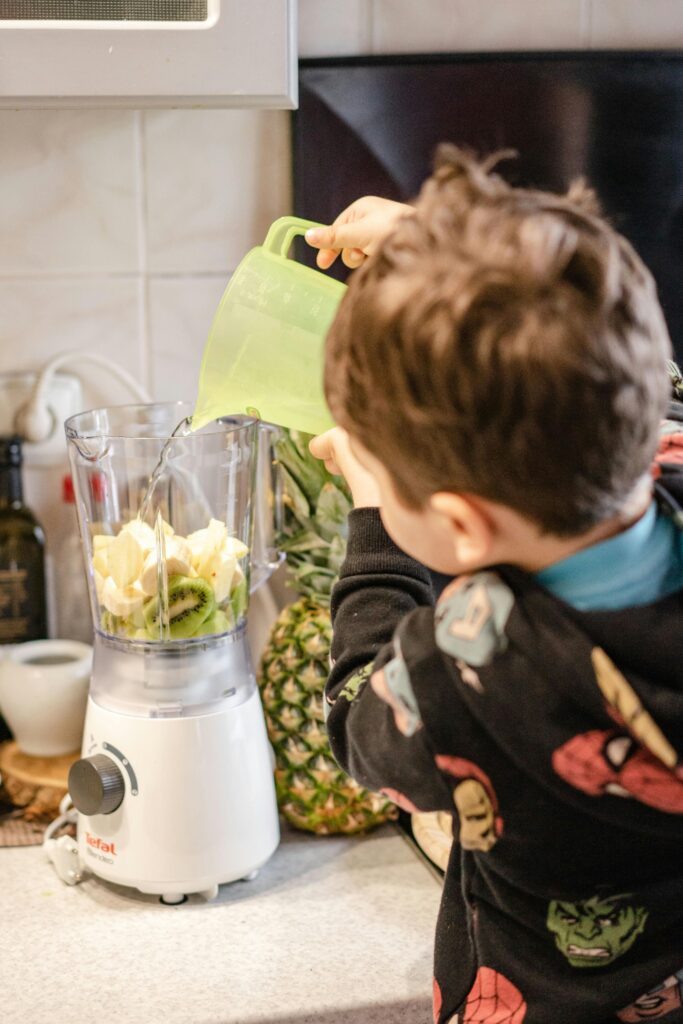
Sensory Smoothie Making:
Invite your child to become a mini chef by involving them in the process of making sensory smoothies. Set up a variety of fruits, vegetables, yogurt, and juice options on a table and let your child choose their ingredients. Encourage them to explore the different textures and smells as they chop, peel, and blend the ingredients together. As they pour the smoothie into a glass and take their first sip, they’ll experience a symphony of flavors that engage their taste buds and sense of smell. This activity not only promotes sensory exploration but also encourages healthy eating habits and fosters independence in the kitchen.
Edible Playdough Creations:
Traditional playdough gets a tasty makeover with this edible alternative made from simple pantry ingredients that you can try at home. At nursery we make playdough with flour but you could try mixing together equal parts of icing sugar and creamy peanut butter (as long as there is no nut allergy in the home) until you achieve a pliable dough-like consistency. If desired, add a drop or two of food colouring to create different hues. Provide your child with cookie cutters, rolling pins, and other dough tools, and watch as they mould and shape their edible creations. Not only does this activity offer tactile stimulation and fine motor skills practice, but it also provides a safe way for younger children to explore sensory play without the risk of ingesting non-edible materials.
Edible sensory play offers a smorgasbord of opportunities for children to engage their senses and unleash their creativity.
Whether they’re squishing rainbow spaghetti between their fingers, stamping colourful prints with fruits and vegetables, blending sensory smoothies, or moulding edible playdough masterpieces, each activity provides a unique and enriching experience. So gather your ingredients, set up your sensory stations, and prepare for a feast for the senses that will inspire hours of imaginative play and learning.
To find out more about how we incorporate learning through play and sensory play into the routine at nursery, please get in touch with us to arrange a visit.
